No. A listing can be sponsored or ranked under the platform’s own rules. Its position does not establish the best price, food or delivery time for your order.
Check the label first. A prominent position needs an explanation before you treat it as a recommendation.
Uber Eats’ merchant documentation describes sponsored listings as a way to promote a restaurant to people using the service. Restaurants can pay for this promotion. That does not mean every first result is sponsored.
Imagine a fictional search for lunch. The first restaurant has a sponsored label, the second has a lower delivered total, and the third offers the shortest stated arrival time. Their positions answer only where the app put them. Choose by what matters to your order: the food, full price and when it will arrive.
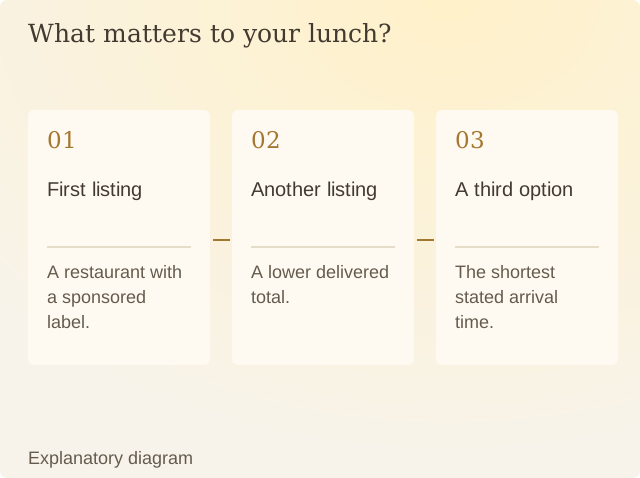
Read the diagram
| Scene | What happens |
|---|---|
| First listing | A restaurant with a sponsored label. |
| Another listing | A lower delivered total. |
| A third option | The shortest stated arrival time. |
Check what each label covers. “Recommended” might reflect previous orders, distance, a platform prediction or another rule. If the app does not explain the ranking, its position alone cannot tell you why it came first.
Use filters to make the task explicit, then check whether sponsored entries remain mixed into the results. An ad can be relevant to the search and still have paid for attention.
The first listing can be the right restaurant. That conclusion needs the menu, total, conditions and the person’s preference. Paying for a position gets the restaurant seen. You still need to decide whether you want its meal.
Sources
Uber Eats: Sponsored listings FAQFirst-party merchant documentation. The example concerns Uber Eats, not all delivery apps.