Not in every system. Google Ads describes an auction using bids, quality, context and other factors. Each platform’s documentation needs checking before generalising its rules.
Payment buys a chance to appear. The auction decides which eligible ads get the available positions.
Google Ads lists several auction inputs, including how much the advertiser offers to pay, the quality of the ad and its destination, and the situation in which it will appear. Its account makes clear that a larger bid alone does not settle the result. Other platforms can use different systems.
Consider a fictional search for a replacement part. Two shops want the same slot. One bids more; the other has an ad and destination closely matching the part. Without the actual auction inputs, we cannot reconstruct why either wins from the visible position alone.
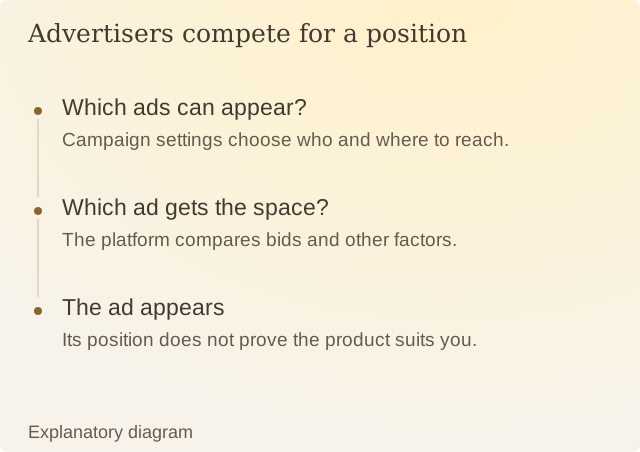
Read the diagram
| Step | Question or meaning |
|---|---|
| Which ads can appear? | Campaign settings choose who and where to reach. |
| Which ad gets the space? | The platform compares bids and other factors. |
| The ad appears | Its position does not prove the product suits you. |
An ad winning that position does not prove the part fits your appliance. You still need to check the model, price and whether the seller can deliver it.
Open the shop and compare what you find with what the ad promised. Is the named product available? Does the price apply to the displayed version? Can you find the terms without leaving the task?
The auction determines where the ad appears. Compare the offer separately using its actual price, conditions and the item you would receive.
Sources
Google Ads: How the auction worksPlatform documentation for Google Ads; other ad systems use their own rules.