Write down what you opened the app to do, when the item first appeared, and when you decided to buy it. A newly formed intention can still be a considered choice.
What did you open the app to do? Looking for a replacement charger gives the session a different starting point from opening a feed with no purchase in mind.
Here is an invented timeline. At 6:10, someone opens a video app to find a repair tutorial; at 6:16, a creator mentions a desk lamp. A shop opens at 6:18. At 6:24, the lamp reaches the basket. Shopping started after the lamp appeared. The times alone do not tell us why the person wanted it.
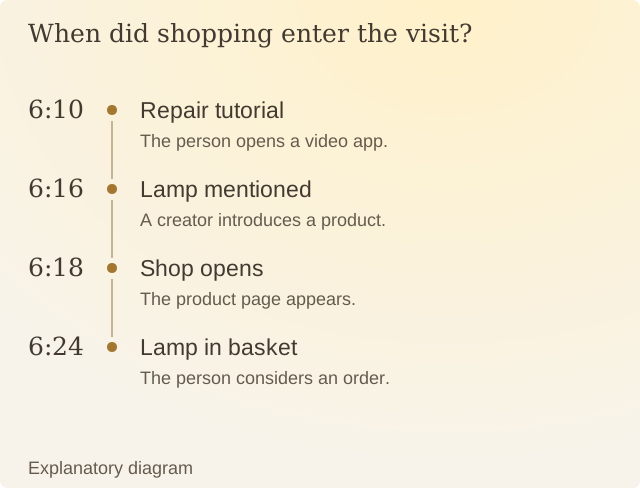
Read the diagram
| Time | Action | What happened |
|---|---|---|
| 6:10 | Repair tutorial | The person opens a video app. |
| 6:16 | Lamp mentioned | A creator introduces a product. |
| 6:18 | Shop opens | The product page appears. |
| 6:24 | Lamp in basket | The person considers an order. |
Ask what happened: what problem would the lamp solve, what alternatives were considered, and was buying today necessary? An order receipt can answer when money moved. It cannot answer those earlier questions.
Research on smartphone checking examines repeated patterns in app use. Repeated checking is something researchers can study. It does not mean every unexpected app visit leads to a purchase you dislike.
A useful decision record needs only the starting task, the new item and the reason for choosing it. Keep it short enough to use. If the reason still holds after comparing the total price and conditions, finding the item while browsing can still lead to a purchase you want.
The distinction helps with later review. A planned purchase that disappointed you and a spontaneous purchase you use daily need different explanations.
Sources
Oulasvirta and colleagues: Habits make smartphone use more pervasiveOriginal smartphone-use research, published in 2012. Modern interfaces may differ.