You can browse to learn prices, find a gift or compare styles. If an item reaches the basket, check its full delivered price and whether you want it. Browsing does not have to end in buying.
Browsing can be the task. Comparing styles, learning prices or finding a gift may begin without an exact product in mind.
A defined purchase has an obvious endpoint: find a charger with the right specification. Exploratory browsing needs a different boundary, such as comparing three options or collecting measurements for later. Without one, every new item can restart the task.
A Reddit author described reserving times for browsing and keeping a wishlist between them. The post records one person’s approach; it cannot establish whether a schedule will help someone else.
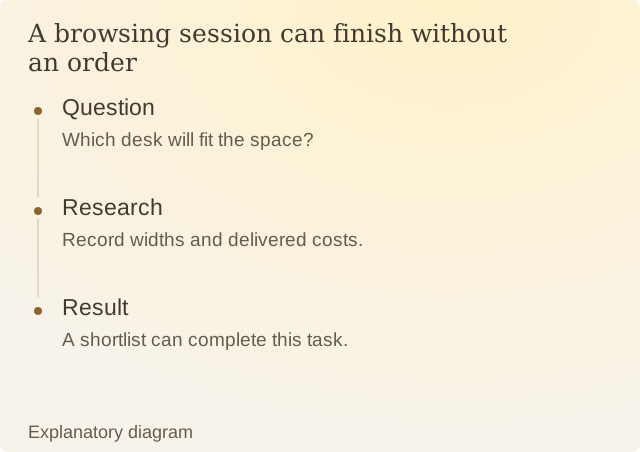
Read the diagram
| Step | Question or meaning |
|---|---|
| Question | Which desk will fit the space? |
| Research | Record widths and delivered costs. |
| Result | A shortlist can complete this task. |
Consider an invented furniture search. The first session collects desk widths and delivery costs. The person saves two links and buys nothing. It still completed a useful task if it established which desk could fit.
When a basket forms, the question changes. Now the person needs the actual total, the version and a reason for choosing that item. Keeping the research notes outside the basket makes it possible to compare without treating every saved option as a pending order.
Review what the session produced: information, a shortlist, an order or nothing useful for the original purpose. An order count would omit the other results.
Sources
Reddit discussion: Setting times for browsingA self-reported strategy, not a controlled test.