A shop can advertise to people who previously visited its website or app. This is called retargeting. You might also see the same product through a wider campaign, so the ad alone cannot tell you why it appeared.
You look at a pair of shoes. Later, the same shop advertises them while you use another app.

One explanation is retargeting. Google’s guide describes how advertisers can use recorded visits and other actions to reach people again. Some campaigns can show products related to those visits.
The shop may be reminding you of something you already looked at. It may also be advertising the shoes to a larger group, including people who never visited. Seeing the ad cannot reveal all the campaign settings behind it.
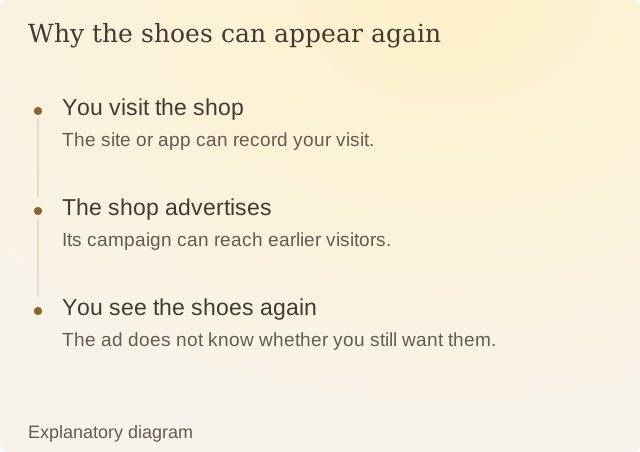
Read the diagram
| Step | Question or meaning |
|---|---|
| You visit the shop | The site or app can record your visit. |
| The shop advertises | Its campaign can reach earlier visitors. |
| You see the shoes again | The ad does not know whether you still want them. |
Your earlier visit does not have to mean you wanted to buy. You could have been comparing sizes, looking for a gift or checking a price for someone else.
When the product returns, check whether you still need it. A familiar picture does not tell you whether the price is competitive or whether the return terms suit you.
If you already finished the search or bought the gift, the ad can still appear. The campaign’s record of a visit does not contain everything that happened afterward. You can leave the earlier visit where it was and make a fresh choice about the offer.
Sources
Google Ads: About setting up your data segmentsGoogle’s guide to using recorded visits and actions to reach earlier visitors.