Ask whether the step helps the person understand or correct the action ahead. Reviewing a payment lets you correct it; repeated cancellation obstacles delay an action you have already chosen.
Find the point where you pay, renew or delete. Paying, renewing and deleting can have consequences that deserve a clear review point.
Imagine a fictional checkout that asks for the delivery address twice but hides the recurring-payment terms behind a link. It creates effort around a repeated detail while leaving the larger commitment easy to miss. Counting steps would not expose that difference.
A useful extra step shows what will happen and lets you change your mind. A final order screen can display the full total, billing frequency and editable quantities together. You can check the order without typing another password or answering an unrelated survey.
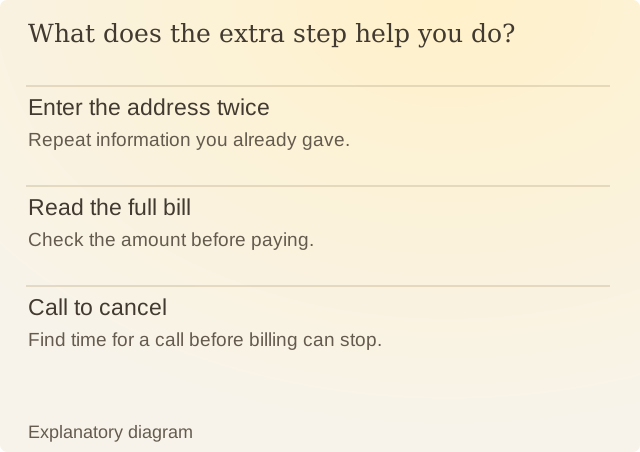
Read the diagram
| Item | Question or meaning |
|---|---|
| Enter the address twice | Repeat information you already gave. |
| Read the full bill | Check the amount before paying. |
| Call to cancel | Find time for a call before billing can stop. |
The FTC’s dark-patterns report documents obstructive cancellation practices. Extra effort can serve the seller when it makes leaving harder without clarifying the person’s decision.
Use the same test in both directions. If starting needs one clear confirmation, stopping should also offer a clear route with the consequences stated. Retention offers can be available without blocking that route.
Someone may need more time, larger text or a screen reader that reads the page aloud. A checkpoint should support those needs. An arbitrary delay that merely makes the interface annoying does not supply missing information.
Sources
FTC: Bringing Dark Patterns to LightUS staff report, 2022. Examples of interface practices; local rules vary.