A pause can help when it gives you time to reconsider something you still want to choose. It can also interrupt a useful task. Finding out how much Renura helps requires testing with people using it.
A pause also takes your attention.
The just-in-time intervention framework by Nahum-Shani and colleagues examines when to offer help, what choices to offer and how interruptions affect people. It did not test Renura.
Consider two invented prompts. One arrives while someone compares a basket total and offers a useful chance to review. Another arrives during a navigation task and obscures the needed screen. The same wording has different consequences at those moments.
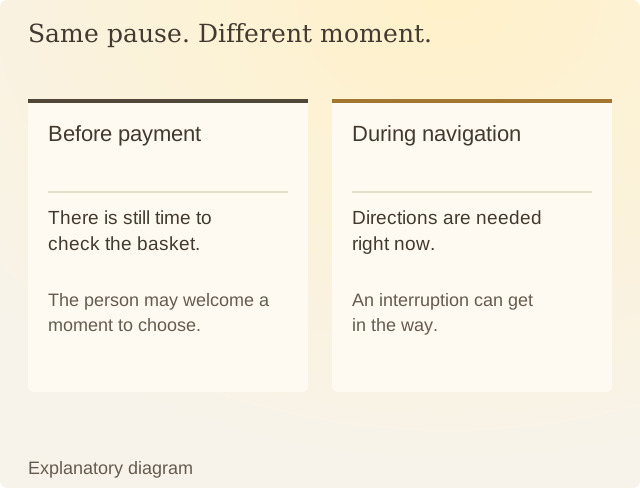
Read the diagram
| Situation | What happens | What to check |
|---|---|---|
| Before payment | There is still time to check the basket. | The person may welcome a moment to choose. |
| During navigation | Directions are needed right now. | An interruption can get in the way. |
The outcome also needs a definition. Fewer completed purchases could mean unwanted spending fell, or that useful orders were interrupted. Fewer minutes in an app could mean a task became easier, or that the task remained unfinished. Counts need the person’s task alongside them.
A useful evaluation would ask whether the prompt was timely, whether it supported the next choice and whether it became repetitive. It should include people who choose Continue and people who stop using the tool.
Renura offers a moment to choose. To find out when that helps, a study needs to ask people about the timing and their choices, including times they wanted to continue.
Sources
Nahum-Shani and colleagues: Just-in-time adaptive interventionsDesign framework published in 2018. Does not test Renura.
Renura: How the pause worksRenura’s guide. App controls checked on 9 October 2026.