Identify who paid, what the label covers and whether the supporting claims have independent evidence. Sponsorship explains a relationship; it does not automatically make a claim true or false.
The FTC’s native-advertising guide discusses commercial material presented in formats resembling surrounding content. Readers need to recognise the ad. They also need a way to check its product claims.
In an invented article listing five headphones, a sponsor pays for one highlighted position. If the label refers only to that placement, it does not tell you who selected the other four. If the whole list is sponsored, the relationship covers more of the page. Look at whether the label covers one item or the entire list.
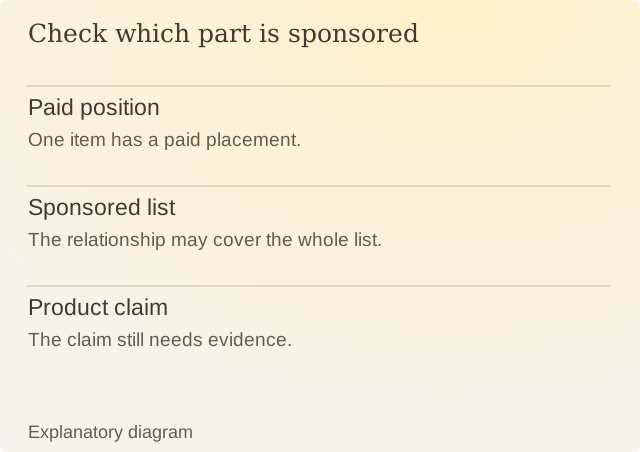
Read the diagram
| Item | Question or meaning |
|---|---|
| Paid position | One item has a paid placement. |
| Sponsored list | The relationship may cover the whole list. |
| Product claim | The claim still needs evidence. |
Then examine the recommendation itself. Does it name the test conditions, price at review time and features that matter to your use? A paid review can contain accurate measurements. Unpaid opinions can contain errors too.
A disclosure hidden at the bottom may arrive after the recommendation has already shaped the first impression. Inspect where the information appears on the screen you actually use, especially on mobile.
You need both pieces: the commercial relationship and the evidence for the claim. Once those are visible, compare the item with relevant alternatives. Looking like an article does not show whether the headphones suit you.
Sources
FTC: Native advertising guideUS business guidance. Used here to explain disclosure, not local legal advice.