Add benefits you can actually use on planned purchases, then subtract the membership fee. Do not treat extra orders made to justify the membership as savings automatically.
Use the planned orders. Count the delivery fees you would have paid on those orders.
In an invented membership, the fee is $30 a month. It removes a $3 delivery charge on eligible orders. Ten such orders break even on delivery fees alone; six save $18 and leave $12 of the fee uncovered. Other benefits need their own values and conditions.
Check the eligible basket size, locations and any excluded orders. A headline promising free delivery can coexist with a minimum spend or another mandatory fee. Only benefits you can use belong in the calculation.
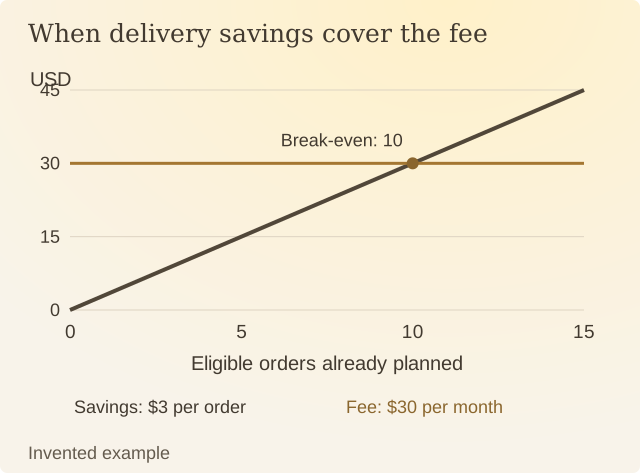
Read the values
| Eligible orders | Delivery fees saved | Membership fee |
|---|---|---|
| 0 | $0 | $30 |
| 5 | $15 | $30 |
| 6 | $18 | $30 |
| 10 | $30 | $30 |
| 15 | $45 | $30 |
The CMA’s UK grocery loyalty review found many real price reductions while warning that a member price need not be the lowest available elsewhere. That is a reason to compare the actual offer rather than count every marked reduction as a benefit.
If a membership encourages adding orders, compare the new total spending with the original plan. Removing delivery charges from extra purchases does not erase the prices of those purchases.
Check the next renewal date and cancellation terms. A useful first month does not establish value for every later month. Revisit the expected orders before renewal, especially if a temporary routine supplied most of the benefits.
Sources
CMA: Loyalty pricing in groceriesUK supermarket review; its findings do not describe every loyalty scheme.