Compare the actual payments over the period you expect to use, then check renewal, cancellation and refund terms. A monthly equivalent printed beside an annual plan is not its payment schedule.
An invented service charges $20 monthly or $180 annually, paid upfront. The annual price divides to $15 per month. Nine monthly payments also total $180; for three months, monthly payments total $60 while the annual payment remains $180 unless a refund term changes that.
At twelve months of use, the annual option costs $60 less. This assumes identical features and no extra charges. How many months do you expect to use it?
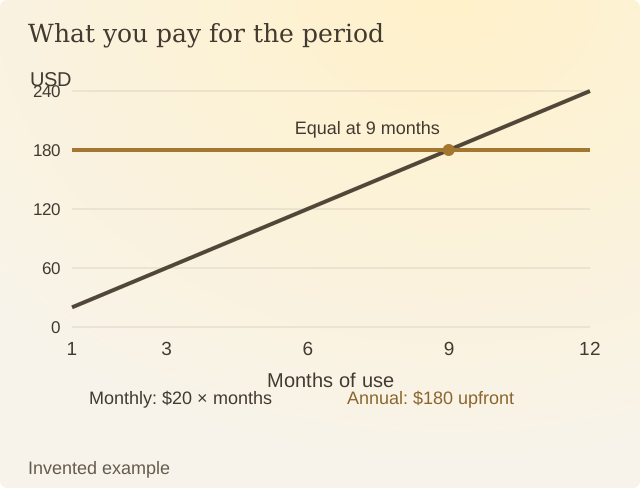
Read the values
| Months | Monthly payments | Annual payment |
|---|---|---|
| 1 | $20 | $180 |
| 2 | $40 | $180 |
| 3 | $60 | $180 |
| 4 | $80 | $180 |
| 5 | $100 | $180 |
| 6 | $120 | $180 |
| 7 | $140 | $180 |
| 8 | $160 | $180 |
| 9 | $180 | $180 |
| 10 | $200 | $180 |
| 11 | $220 | $180 |
| 12 | $240 | $180 |
Keep the example prices fixed and change the period.
The FTC’s renewal guidance recommends examining continuing charges and cancellation terms. Check whether cancellation stops future renewal, ends access immediately or permits a partial refund; those are different outcomes.
Also record the price after any introductory year. A first-year reduction does not establish the next renewal amount. A calendar reminder can make the review date visible, but the confirmation and current terms supply the billing details.
Choose using the payment schedule you will actually accept. For three months of use, this example’s monthly plan costs $120 less than paying for the year. For twelve, the annual plan costs $60 less.
Sources
FTC: Free trials, auto-renewals and subscriptionsConsumer guidance; actual terms and local rules still need checking.