It saves money only if the final total is lower. An extra item can also be worth a higher total to you, but the extra payment is still an expense.
The basket is close to free delivery. The message asks you to add more, so compare the two complete payments.
These amounts are invented. Planned items cost $42 and delivery costs $5 producing a $47 total. Free delivery starts at $50. Adding an $8.50 item changes the total to $50.50 with no delivery charge in this example.
The payment rises by $3.50. Removing the fee did not reduce the amount leaving the account.
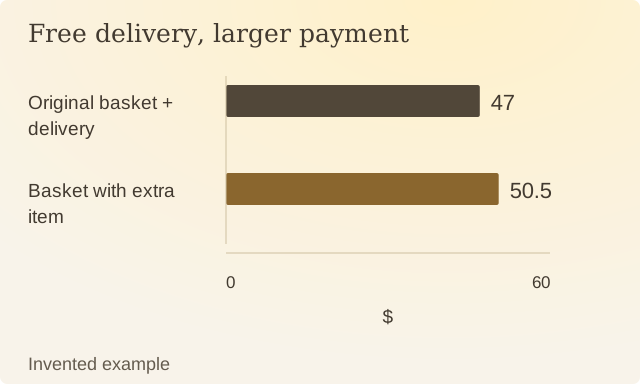
Read the values
| Item | Value |
|---|---|
| Original basket + delivery | $47 |
| Basket with extra item | $50.50 |
If the extra item replaces something you already planned to buy, that comparison may still favour the larger basket. Include the separate purchase and any charges it would otherwise require. Ask whether you would use the extra item.
The CMA’s choice-architecture review examines how interfaces arrange information and choices. The bar showing how close you are to free delivery can be accurate. It still leaves you to compare how much you will pay with and without the extra item.
Check what the threshold counts. Some offers exclude particular items or apply after discounts. Read which items count toward free delivery and recalculate after changing it.
Keep the original basket as the reference. Compare it with the larger order. Would you pay the extra $3.50 for that item if there were no free-delivery message?
Sources
CMA: Evidence review of online choice architectureResearch review, 2022. Examines interface practices. Renura-specific effects are outside its scope.