Check the price before the discount, the full amount you would pay and any conditions. Compare the same item from another seller. A percentage alone does not establish that an offer is good value.
Thirty per cent off describes a relationship between two prices. What price is the discount based on?
Here is an invented example. An item is shown at $100 before the discount and a sale price of $70 so the advertised reduction is $30. If another seller offers the same item for $65 on comparable terms, the 30% calculation stays correct against $100 while the other offer costs less.
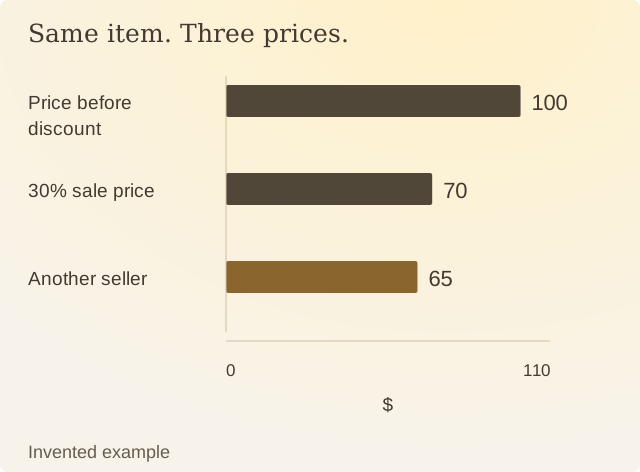
Read the values
| Item | Value |
|---|---|
| Price before discount | $100 |
| 30% sale price | $70 |
| Another seller | $65 |
Compare shipping and return conditions alongside the item. A cheaper listing from a different seller may carry different delivery terms, which belong in the comparison.
Find where that earlier price came from. A previously charged price, a recommended price and a competitor’s price describe different comparisons. Read the label. If you can find earlier prices, check when the item actually sold at that amount.
The FTC’s dark-patterns report examines misleading price comparisons. To check a particular shop, you need its earlier prices. If you cannot find them, the discount label alone will not settle the question.
Then ask whether you want the item at its sale price. If you already planned to buy the item, the reduction can lower that expense. If the item entered the decision through the sale, $70 still leaves your account when you buy it.
You may decide the item is worth that amount. Make the decision using its actual price and conditions, with the advertised saving treated as a comparison you can check.
Sources
FTC: Bringing Dark Patterns to LightStaff report, 2022. Examples and consumer-protection analysis. Claims about a particular retailer need separate evidence.