No. A 2024 review combining results from many studies found slightly higher spending with cashless payments on average, with differences between contexts and a weakening effect over time. An average finding does not predict what a particular person will do.
A payment can take seconds. Earning the amount may have taken much longer, so a familiar comparison can make the commitment easier to review.
Schomburgk, Belli and Hoffmann’s 2024 meta-analysis combined 392 effect sizes from 71 papers. It found a small average tendency towards greater spending with cashless payments than cash, with differences between contexts and a weakening effect over time.
The analysis did not find evidence that particular cashless-payment features explained the effect. Using it to claim that one named payment screen necessarily causes overspending would go beyond the result.
Paying quickly does not mean you chose quickly. You could have spent hours comparing prices before opening the payment app. You could also pay slowly without checking the full total.
Digital payments can reduce handling and provide records for later review. You can keep that convenience and still check whether you want to spend the amount shown.
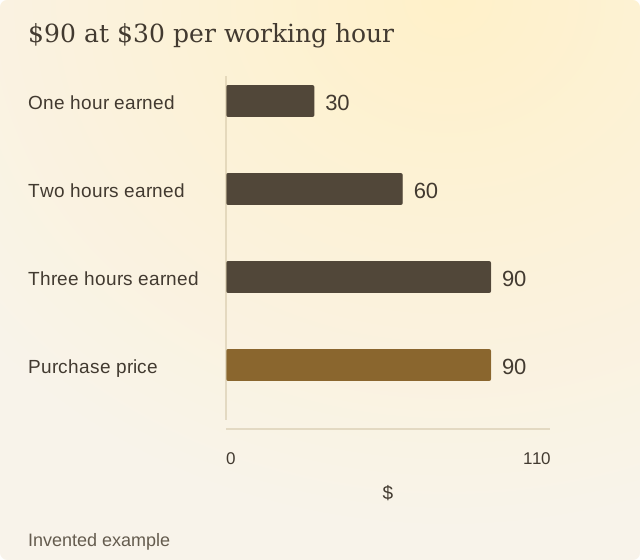
Read the values
| Item | Value |
|---|---|
| One hour earned | $30 |
| Two hours earned | $60 |
| Three hours earned | $90 |
| Purchase price | $90 |
Consider an invented $90 purchase compared with $30 of take-home earnings per working hour. The arithmetic gives three hours. The pay and amount are fictional, and you choose whether that comparison helps.
You could instead compare the price with a category budget or the item’s expected use. Renura has no bank balance or affordability measure to supply that judgment. The pause gives you a moment to decide for yourself.
Sources
Schomburgk, Belli & Hoffmann: Less cash, more splash?Journal of Retailing, 2024. A meta-analysis of 71 papers; reports a small, context-dependent cashless effect.