A swipe cannot measure dopamine, a chemical involved in how the brain learns from rewards. Calling an app visit a “dopamine hit” does not explain why you opened it.
You open a messaging app again. You might be waiting for a reply, or you might have opened it out of habit. The tap alone cannot tell which.
Dopamine is a brain chemical. Wolfram Schultz’s review describes how certain dopamine signals respond to the difference between a reward you expected and the reward you received. Those signals help explain learning from rewards.
The review did not measure dopamine in someone scrolling through your feed. It does not let an app diagnose addiction from a swipe or establish that a “dopamine detox” treats it.
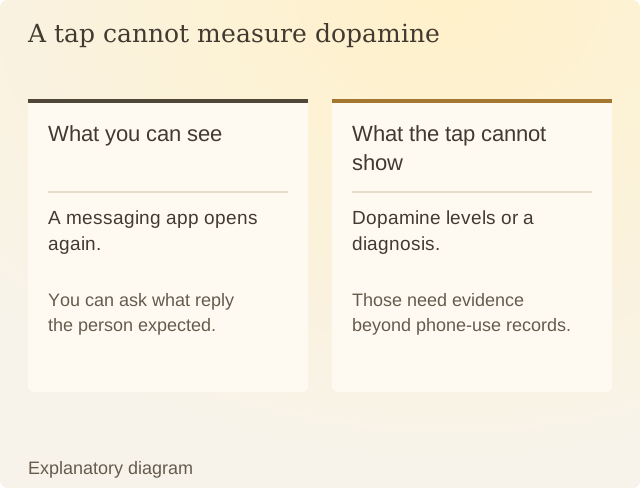
Read the diagram
| Situation | What happens | What to check |
|---|---|---|
| What you can see | A messaging app opens again. | You can ask what reply the person expected. |
| What the tap cannot show | Dopamine levels or a diagnosis. | Those need evidence beyond phone-use records. |
When people call each return to an app a dopamine hit, they skip questions we can actually answer. What were you waiting for? Did the reply arrive? Did opening the app help you do what you wanted?
Those details explain more about the visit than a label attached to the tap. Repeated checking is something you can notice without diagnosing it.
Renura offers a pause based on patterns in scrolling, tapping and engagement. It cannot measure brain chemicals or know your reason for opening an app. You get to decide whether you want to stay.
Sources
Wolfram Schultz: Dopamine reward prediction error codingDialogues in Clinical Neuroscience, 2016. A neuroscience review of reward prediction-error signalling. Phone use and dopamine-detox treatments are outside its scope.