Identify the promised answer and where it is delivered. If another clip is needed, assess that new clip on its own value rather than treating the time already spent as a reason to keep watching.
What answer did the clip promise? A useful explanation should make it possible to tell when the question has been answered.
In an invented sequence, a clip promises the cost of running an appliance. It gives the wattage but ends before explaining hours of use or the electricity rate, then points to part two. You need all three to calculate the cost. Does the next clip give you the hours and electricity rate?
The second clip might supply them well. It might also repeat the first clip and defer the calculation again. Check what each part adds: new evidence, a necessary step, or only another promise.
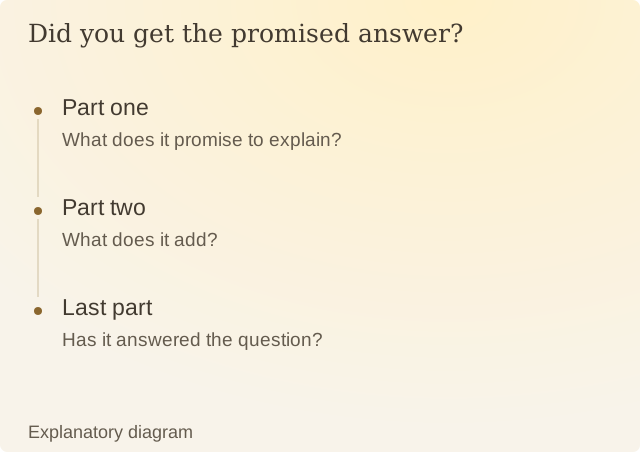
Read the diagram
| Step | Question or meaning |
|---|---|
| Part one | What does it promise to explain? |
| Part two | What does it add? |
| Last part | Has it answered the question? |
The FTC’s native-advertising guide addresses content whose commercial status may need disclosure. If a reveal leads to a product link, also check whether the creator is being paid for the recommendation.
Time already spent cannot supply a missing answer. For the appliance example, searching for the appliance’s power rating and your electricity rate may answer the practical question directly.
A multi-part lesson can need several videos. The test is whether each part adds something useful and whether the promised result arrives. Check that before deciding whether the sequence misleads.
Sources
FTC: Native advertising guideUS business guidance. Used here to explain disclosure, not local legal advice.