Choose a period, add the actual charges and compare them with what the purchases provided. Record refunds and one-off expenses separately so you can see why the total changed.
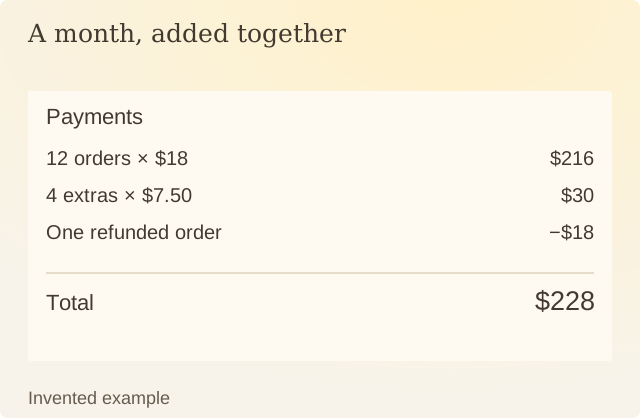
Here is an invented month with twelve $18 orders and four extras costing $7.50 each. Together they cost $246: $216 plus $30. If one $18 order is refunded, net spending becomes $228. Keep both the original charge and refund dates if timing matters.
The total does not describe the purpose of the purchases. Some could replace planned meals; others could belong to a different task. Separate food orders if you want to compare meal spending.
Read the values
| Item | Value |
|---|---|
| Payments: 12 orders × $18 | $216 |
| Payments: 4 extras × $7.50 | $30 |
| Payments: One refunded order | −$18 |
| Payments: total | $228 |
The CFPB’s 2025 BNPL study examines overlapping credit commitments in a US sample. That research concerns US borrowers. The example here simply shows how adding your own charges and refunds gives you a fuller total.
For an ordinary spending review, account statements or receipts provide the amounts. Decide whether your comparison needs purchase dates, payment dates or both. Counting an instalment and its full purchase price in the same total would count part of the cost twice.
For your own total, choose a period and keep the refunded amounts visible. Comparing gross charges with net spending can explain why a bank statement and an order list appear to disagree.
Sources
CFPB: Consumer use of BNPL and other unsecured debtUS observational report, January 2025. Does not establish causation or a reader’s finances.