Each purchase can look small on its own while several payments fall due together. A dated combined schedule shows the amount due in each period without counting the full purchase twice.
Use the due dates. Separate plans do not coordinate themselves around the same account balance.
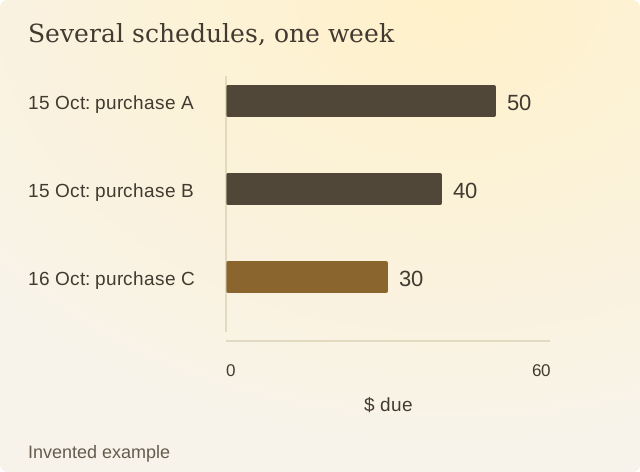
Here is an invented schedule. Purchase A requires $50 on 15 October; B requires $40 that day; C requires $30 on 16 October. The two-day total is $120. Looking only at C’s $30 instalment would miss $90 already due nearby.
The CFPB’s January 2025 BNPL study examined simultaneous loans in its US data. The study concerns US borrowers. Your own due dates and amounts are what you need for this calculation.
Read the values
| Item | Value |
|---|---|
| 15 Oct: purchase A | $50 due |
| 15 Oct: purchase B | $40 due |
| 16 Oct: purchase C | $30 due |
Make one schedule with payment date, amount, provider and payment method. Include existing commitments that share the account. Keep the original purchase prices in a separate view so their future payments are not counted twice in the period total.
An automatic debit can simplify making payments, but it still needs available funds on the stated date. If a return is pending, use the current schedule until the provider confirms which payments have changed; an expected refund and a confirmed adjustment differ.
Compare the due-date list with money available on those dates, including other scheduled payments. A monthly total can hide a shortage within the month.
Sources
CFPB: Consumer use of BNPL and other unsecured debtUS observational report, January 2025. Does not establish causation or a reader’s finances.