No. Repetition can reflect how a campaign delivers ads. Product quality needs evidence about the product, its use and the seller.
Count appearances separately from evidence. Five ads for the same claim still leave you with one claim to check.
Google Ads describes frequency caps that limit how often certain campaign ads appear to a person. Delivery also depends on campaign type and available identifiers. You do not have to visit the shop again for its campaign to reach you more than once.
Imagine a fictional shoe campaign appearing on three sites. The shoes are described as lasting twice as long as a competitor’s. Seeing it three times adds no new test of how long the shoes last. It repeats the same claim.
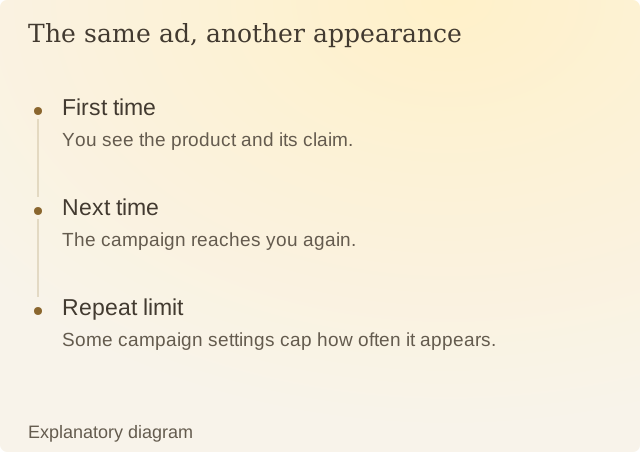
Read the diagram
| Step | Question or meaning |
|---|---|
| First time | You see the product and its claim. |
| Next time | The campaign reaches you again. |
| Repeat limit | Some campaign settings cap how often it appears. |
To assess the claim, look for the comparison method, conditions and source. Was durability measured under a defined test? Does the result apply to the exact model? A reviewer’s experience may add evidence if it is independent and describes actual use.
Also check what the repeat asks next. A familiar name can make the destination easier to recognise, but recognition does not establish delivery terms or a return policy.
Repeated ads can be useful reminders for an item already under consideration. Their number cannot tell you how many other people bought it, how satisfied those people were or whether the product fits your use. Keep each of those questions tied to its own evidence.
Sources
Google Ads: Frequency cappingCampaign controls described by the platform.