No. Planning is one part of a decision. The item’s use, price, conditions and the person’s own reason for buying determine whether the purchase fits.
Enjoyment counts as a purpose. A book, a meal or a game can be worth choosing for the experience itself.
Consider two invented purchases. Someone plans to buy shoes but orders a size that does not fit; someone else discovers a book at a shop and reads it that weekend. Planning describes how each purchase began. It does not settle which worked out.
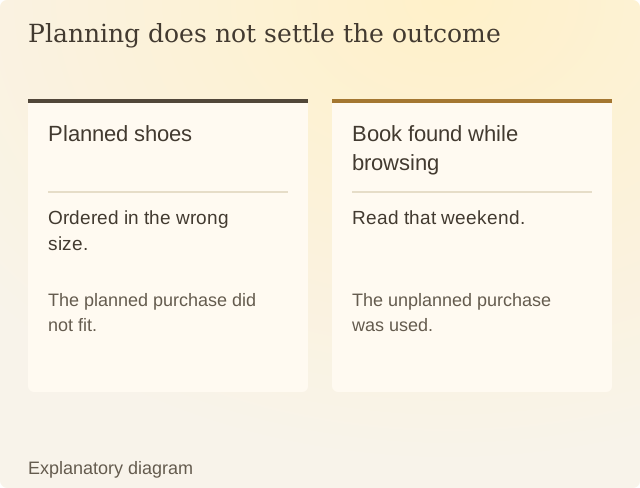
Read the diagram
| Situation | What happens | What to check |
|---|---|---|
| Planned shoes | Ordered in the wrong size. | The planned purchase did not fit. |
| Book found while browsing | Read that weekend. | The unplanned purchase was used. |
A useful review records the reason for buying, the total cost and whether the item served that reason later. It avoids replacing the person’s purpose with a universal target such as the fewest purchases possible.
The CMA’s UK loyalty-pricing review found that many offers delivered real price savings while still advising shoppers to compare alternatives. An offer can be accurate and worth considering. You still need to decide whether you want what is on offer.
Keep the questions specific. Was this the right quantity? Did it arrive when you needed it? Would the same choice make sense at the full price you would pay without the sale message?
Renura offers Pause and Continue because the useful outcome can include staying. You know why you want the item, what else you could choose and what you can spend.
Sources
CMA: Loyalty pricing in groceriesUK supermarket review; its findings do not describe every loyalty scheme.
Renura: How the pause worksRenura’s guide. App controls checked on 9 October 2026.