Another clip does not reliably make boredom go away. In some video tasks, Tam and Inzlicht’s 2024 experiments found that switching increased boredom. They did not find the same effect in every task and sample.
You can skip a video before it ends. You can also jump ahead within it. Is watching more enjoyable when you keep moving on?
Tam and Inzlicht’s seven experiments examined boredom and switching between or within videos. In some tasks, switching increased boredom and reduced engagement. The findings varied across tasks and samples, so they cannot tell us that every skipped clip makes the experience worse.
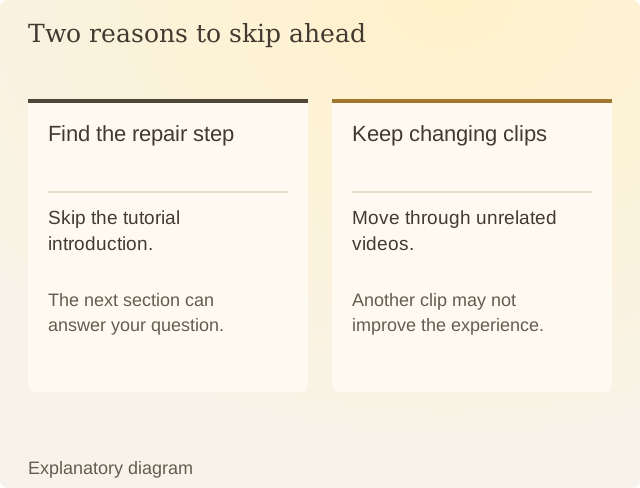
Think of looking for the repair step in a tutorial. Skipping the introduction helps you find what you need. That differs from moving through unrelated clips and hoping the next will be worth watching.
Read the diagram
| Situation | What happens | What to check |
|---|---|---|
| Find the repair step | Skip the tutorial introduction. | The next section can answer your question. |
| Keep changing clips | Move through unrelated videos. | Another clip may not improve the experience. |
If you want to compare your own viewing, choose a question first. Did you find the answer you needed? Did you enjoy watching? You can try staying with one video and compare it with a session of switching.
Your experience can help you choose how to watch next time. It cannot establish what works for everyone, and the research cannot tell how you felt during one particular swipe.
Renura does not read your feelings. When it offers a pause, you can decide whether another clip is what you want.
Sources
Tam and Inzlicht: Fast-forward to boredomSeven experiments, 2024. Effects depended on the task; no individual diagnosis.