No. A return can serve a task, follow a habit, or have another explanation. Compare what you expected to find with what had actually changed.
You open the app again. Has anything changed since you last looked?
Oulasvirta and colleagues’ smartphone study describes brief checking habits. That is a reason to examine repeated openings, not a reason to label every repeated visit a problem.
Imagine someone awaiting a delivery confirmation in a fictional app. They open it four times in ten minutes. If the status updates only once, the other openings add no new information about the order; the record of those visits cannot explain why the person checked again.
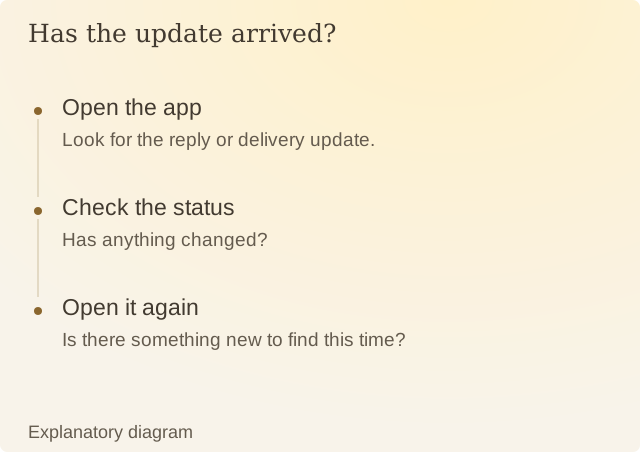
Read the diagram
| Step | Question or meaning |
|---|---|
| Open the app | Look for the reply or delivery update. |
| Check the status | Has anything changed? |
| Open it again | Is there something new to find this time? |
If you want to check your own repeated visits, note: what update was expected, whether it appeared, and what action became possible afterward. You do not need to reconstruct every gesture.
Can you get the update without opening the app? An order-status notification may make opening the full app unnecessary. For a task without a reliable alert, a chosen review time can make sense. Neither approach guarantees that waiting becomes easy.
Renura can offer a pause while you use the app. It cannot know whether you are waiting for work news, an important reply or a routine order. You can choose to stay if you still want to check.
Sources
Oulasvirta and colleagues: Habits make smartphone use more pervasiveOriginal smartphone-use research, published in 2012. Modern interfaces may differ.
Renura: How the pause worksRenura’s guide. App controls checked on 9 October 2026.