A streak counts consecutive days when you complete the app’s required activity. A ten-day count shows that you returned. It does not tell you how much you remember.
Duolingo defines its streak around consecutive days of completed lessons and describes freezes that can protect the run. The count follows those rules. It does not test how many words you remember.
Imagine two fictional learners with a ten-day streak. One spends twenty minutes practising new material daily; another completes a short review. The same count can accompany different work. To compare learning, you would need a measure of what each can recall or do.
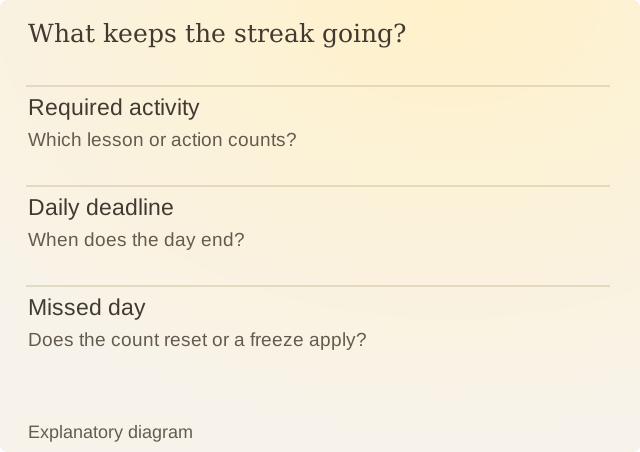
Read the diagram
| Item | Question or meaning |
|---|---|
| Required activity | Which lesson or action counts? |
| Daily deadline | When does the day end? |
| Missed day | Does the count reset or a freeze apply? |
The streak may still help someone remember a chosen routine. Are you opening it to practise, or mainly to keep the count? A daily target can make sense for one task and be irrelevant to another.
Look at what happens when a day is missed. Does the interface explain the count change plainly? Does it make continuation easy without suggesting that earlier learning vanished? Those are design choices you can inspect.
If the count becomes the main reason for opening, revisit the activity it represents. You can preserve a routine, change its frequency or choose a different measure. Losing a consecutive-day count does not erase a skill you already learned.
Sources
Duolingo: What is a streak?First-party feature definition checked on 9 October 2026.