Identify what the extra costs and remove it if it does not belong in the order. Recheck the full total and any other conditions after changing the selection.
Here is an invented ticket order. The ticket costs $80 and a $12 protection product is selected automatically. The basket total is $92 before other charges. Removing the extra returns it to $80; its inclusion needs an explanation separate from buying the ticket.
The CMA’s evidence review discusses defaults as predefined choices that people can leave in place. A saved language can be useful. A selected paid extra adds money to your bill.
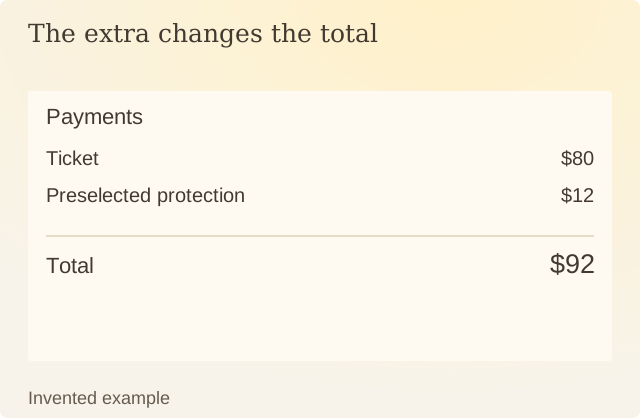
Read the values
| Item | Value |
|---|---|
| Payments: Ticket | $80 |
| Payments: Preselected protection | $12 |
| Payments: total | $92 |
A useful default can preserve a saved preference such as language. For a paid extra, check the cost, what it includes and whether you can remove it.
Some choices affect other terms. Removing insurance might change cancellation coverage rather than the ticket’s basic validity. Read the coverage terms before removing it.
After editing, read the final summary. A cleared checkbox that leaves the fee in the total needs another check. The total needs to match your edited order. Check the bill after removing the extra.
Sources
CMA: Online choice architecture evidence reviewUK evidence review, 2022. Supports the named interface practice, not a diagnosis of a reader.