Convert each price to the same unit, then consider how much you will actually use. A large pack may cost less per gram while leaving you with more than you can use.
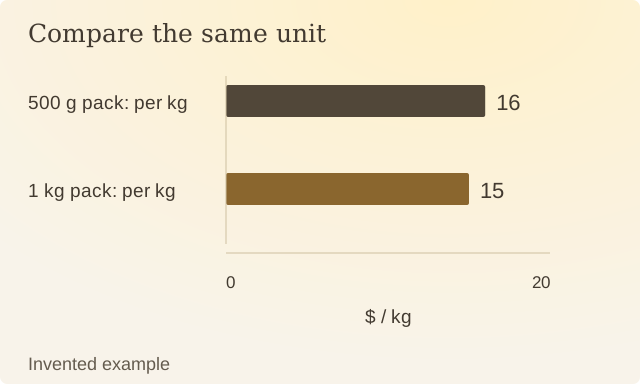
Here are invented offers for the same rice. A 500 g pack costs $8 or $16 per kilogram. A 1 kg pack costs $15. The larger pack is $1 cheaper per kilogram, while requiring $7 more at checkout.
The CMA’s unit-pricing work examines whether grocery price information supports comparisons. Here we compare the same rice by the kilogram. The UK review does not tell us which price labels every shop uses.
Read the values
| Item | Value |
|---|---|
| 500 g pack: per kg | $16 / kg |
| 1 kg pack: per kg | $15 / kg |
Check the quantity basis. A price per serving can depend on the seller’s chosen serving size. A detergent’s weight and number of washes can tell different things if concentrations differ. Keep the unit tied to the use being compared.
Then consider usable quantity. If half the larger pack goes unused, its lower printed unit price may not describe the cost of what you actually used. The expiry date and storage available belong in that comparison.
The price per kilogram helps compare pack sizes. You still need to choose the rice you want, the amount you will use and what you can pay today.
Sources
CMA: Unit pricingUK grocery investigation. Arithmetic examples here use invented dollar amounts.