Check what the points can buy, how many you need and when they expire. Include any extra payment required to use them. A points balance is not automatically money available to spend.
In an invented programme, 1,000 points buy a $10 voucher after reaching a 2,000-point minimum. A 1,500-point balance does not yet unlock that voucher. Spending more to reach the minimum needs its own cost comparison.
Suppose the voucher requires a $100 purchase. If you had already planned an eligible item at that price, it can reduce that expense. If using it requires a new order, you would have to spend more money to use it. It is not cash you can spend anywhere.
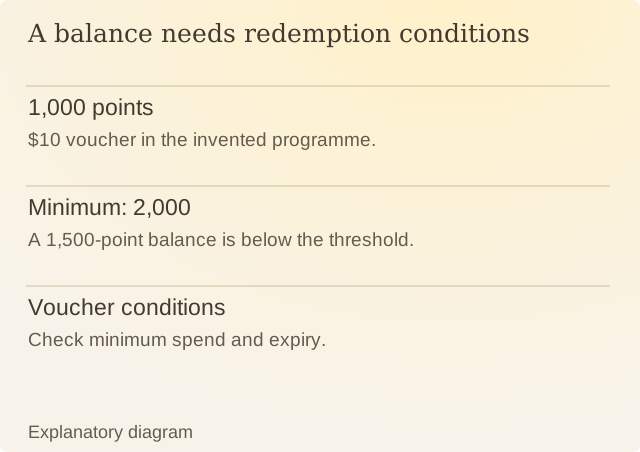
Read the diagram
| Item | Question or meaning |
|---|---|
| 1,000 points | $10 voucher in the invented programme. |
| Minimum: 2,000 | A 1,500-point balance is below the threshold. |
| Voucher conditions | Check minimum spend and expiry. |
The CFPB’s rewards spotlight documents complaints about changed value and limited redemption. Those complaints show problems to check for. They do not tell us how often they occur in every programme.
Check whether points or the redeemed voucher expire, and whether the date changes after another purchase. Account closure, returns and transfer rules can also affect value. Record the programme’s current terms alongside the balance.
Evaluate the next purchase at its own payable price before including an expected reward. You may choose to use the points or let them expire. The remaining balance alone cannot justify additional spending; the available redemption and the item you would use determine the comparison.
Sources
CFPB: Credit-card rewards issue spotlightUS complaint-based report, May 2024. Illustrates issues; does not measure their prevalence.