Research can find patterns across people, but it cannot tell why you bought something after a difficult day. Start with your own reason for the purchase and what you expected it to do.
A difficult day can come with very different needs. You might need a meal because you have no time to cook, or you might be browsing without a purchase in mind.
A 2020 food-purchasing study examined stress, trust and fears about food availability during COVID-19. That setting matters. Its findings cannot explain a particular clothing order after an ordinary workday.
In a Reddit delivery discussion, one author connected recurring orders with circumstances in their own life. Their explanation belongs to them. Another person ordering at the same time may have a different reason.
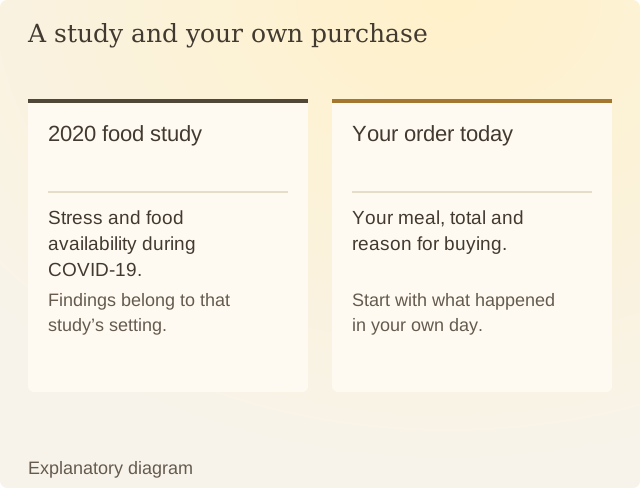
Read the diagram
| Situation | What happens | What to check |
|---|---|---|
| 2020 food study | Stress and food availability during COVID-19. | Findings belong to that study’s setting. |
| Your order today | Your meal, total and reason for buying. | Start with what happened in your own day. |
For your own purchase, ask what you wanted from it. Did the meal save time? Did the item solve a problem? Were the quantity and full price what you expected?
Then identify anything you would change. That might mean keeping a usual meal option available, checking the total before ordering or buying a different quantity. Choose the change that fits what happened.
Renura can offer a pause in the moment. It cannot tell that stress caused an order, and it does not need that explanation to let you choose whether to continue.
Sources
Consumers’ fears, purchasing and perceived stress during COVID-19Context-specific observational research, 2020. Do not extend it to every shopping session.
Reddit discussion: Repeated delivery orderingThe author’s own explanation of their ordering. Not evidence about another reader.